Sayuri’s life as the Chairman’s mistress
Memoirs of a GeishaSayuri’s life as the Chairman’s mistress fulfills the hope that has shaped her pursuit of becoming a geisha, yet the relationship also remakes her place in the world. The Chairman’s support brings companionship and a more peaceful daily life, but securing that life means withdrawing from geisha work, enduring the loss of Nobu’s friendship, and eventually leaving the Nitta household and Japan. The story presents love not as a reward that restores what came before, but as a bond whose consequences become the conditions of a different life.
From Gion to a private life
After the Chairman became her danna, Sayuri found that the struggle and worry that had made her life feel vivid began to ease. Looking back, she describes herself as a tree whose roots had finally reached rich soil. The image marks a real change in her sense of security, but it is also retrospective: only after she was no longer enduring her earlier pain could she speak frankly about how desolate life had been.
That contentment did not erase the cost of the relationship. Sayuri explains that the Chairman wanted her out of Gion so Nobu would not see her, but he was already married and would not marry her. A separate teahouse or inn might have given her a home beyond Gion, but Mother would not let her leave the Nitta household if doing so meant losing its revenue from the arrangement. The compromise was that the Chairman paid the okiya a considerable sum each month in return for permission for Sayuri to end her geisha career.
Sayuri therefore remained in the okiya while ceasing to live as a working geisha. She no longer attended morning lessons, made ceremonial rounds to pay her respects, or entertained in the evenings. The change was neither marriage nor a clean departure into independence: she occupied what she calls a peculiar middle ground, with the Chairman’s support but without the public professional life that had structured her days.
The price of choosing the Chairman
The arrangement also meant losing Gion as a community. Sayuri had set out to become a geisha in order to win the Chairman’s affection, so she might have expected retirement to feel like a simple fulfillment of her purpose. Instead, years of work had brought her friendships with geisha and with men she had come to know through her profession. Once she stopped entertaining, she was not barred from other women’s company, but those who still worked in Gion had little time to socialize.
She could remember the sense of promise in an evening engagement: two geisha hurrying along together, laughing about the previous appointment and anticipating the next. She did not envy the uncertainty of their lives, but she missed the possibility that the evening ahead might bring some mischievous pleasure. The contrast makes retirement an emotional loss as well as a change in occupation: Sayuri has attained the relationship she wanted, yet no longer shares the rhythms and expectations of the world through which she pursued it.
Her separation from Nobu remains the sharpest wound. Sayuri had hoped he might one day forgive her, and she continued asking Mameha whether he had inquired after her until the unanswered hope became too painful. The underlying conflict is one of friendship as well as romance: when a man wins a prize coveted by his friend, the friendship may suffer unless the prize can be hidden from view. Sayuri recalls the same pattern in the friendship between herself and Pumpkin after Sayuri’s adoption. In choosing a life with the Chairman and being kept out of Nobu’s sight, she did not merely lose Nobu’s friendship; she also lost her place in Gion.
A home made through evenings together
In the spring after Sayuri became his mistress, the Chairman bought a luxurious house in northeast Kyoto called Eishin-an, or Prosperous Truth Retreat. It was intended for company guests, though he used it more than anyone else. He and Sayuri met there three or four nights a week, sometimes more. On especially busy days he arrived late, wanting only a hot bath and conversation before sleep. More often he came around sunset, ate dinner, and talked with Sayuri while servants lit the garden lanterns.
The companionship depended on attention to the changing mood of their conversations. The Chairman would begin by recounting the workday: troubles with a new product, an accident involving a truckload of parts, or some other business concern. Sayuri understood that he was not necessarily telling her these things because he wanted her to know the details. She listened instead for the softening in his voice, taking it as a sign that the day’s burdens were draining away. Then she would guide the conversation toward lighter matters: something that happened on the way to work, a film they had watched, or a funny story from Mameha, who sometimes joined them. Her care made the evening a quiet routine of listening, easing the Chairman out of work, and turning together toward ordinary pleasures.
The relationship’s private rhythm became a route beyond Japan. In the fall of 1952, Sayuri accompanied the Chairman on his second trip to the United States, first traveling alone by rail to Tokyo and then flying with him to Hawaii. He bought her a bathing suit, her first, and she sat on the beach with her hair at her shoulders like the women around her. Hawaii reminded her of Amami, an association she worried might occur to the Chairman as well, though he said nothing about it. They continued to Los Angeles and then New York City.
New York had been known to Sayuri only through films, and she had not quite believed its great buildings existed. From her room at the Waldorf-Astoria Hotel she looked at the tall buildings and clean streets and felt she was seeing a world where anything was possible. Although she had never left Japan and expected an alien setting to frighten her, the Chairman’s enthusiasm helped her approach the visit with goodwill. He kept a separate room chiefly for business but stayed with her in her suite each night. Sometimes she woke to find him sitting beside the window, holding open the sheer curtain and looking down at Park Avenue; on one night after two o’clock, he took her by the hand to watch a young couple kissing beneath a street lamp.
Departure and a new life in New York
Sayuri’s final departure grew out of the same conflict between her bond with the Chairman and the consequences of keeping that bond hidden from Nobu. By the end of their discussion about the future, the Chairman understood that she was suggesting a woman in her position might take a child away from Japan and not return. He looked startled, and the possibility of her leaving him brought a tear to his eye. In August of that year, Sayuri moved to New York City to open a small teahouse for Japanese businessmen and politicians traveling in the United States.
Moving also ended Mother’s practical power over her. Mother tried to make the New York business an extension of the Nitta okiya, but the Chairman refused. Sayuri broke her ties with Mother by leaving Gion, and the Chairman sent two accountants to make sure Mother handed over every yen Sayuri was owed. The departure thus changed more than her address: it severed the institutional connection that had continued even after Sayuri stopped working as a geisha.
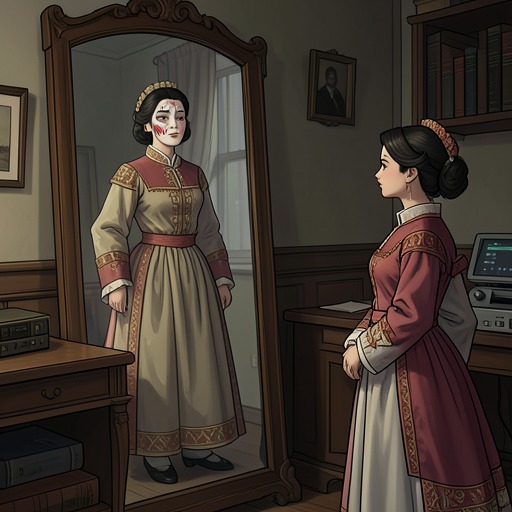
The first closure of her apartment door at the Waldorf Towers frightened her, but New York soon felt at least as much like home as Gion. Her teahouse, on the second floor of an old club off Fifth Avenue, was modestly successful from the beginning. Geisha came from Gion to work there, and Mameha sometimes visited. Sayuri herself later went in mainly when close friends or old acquaintances were in town; she also spent mornings studying poetry, music, or New York City history with Japanese writers and artists, and usually had lunch with a friend. Preparing for parties at her apartment, she still encountered the milky odor of the white makeup she had worn in Gion through the memory stirred by her mirror. She wished she could visit, but feared being disturbed by the changes: after Mother’s death, the Nitta okiya was demolished and replaced by a small concrete building with a bookshop and two apartments. The life she made in New York offered a home and work of her own, even as the old Gion she remembered became harder to recover.